
When it comes to refurbishing laptops, not all processes are created equal. Across the world, refurbishing companies use different methods to bring used devices back to a like new standard, each with its own advantages and drawbacks.
At Pure IT Refurbished, over the last 15 years we’ve tried all of these methods and more. In this blog, we’ll explore the three main ways laptops are refurbished today and the pros and cons of each. Plus, we’ll touch on a fourth approach—where some companies skip refurbishment altogether and simply grade and resell laptops in their existing condition.
Note; we are only covering the processes to improve the cosmetic condition of laptops rather than the technical testing processes which we’ll cover in a future article.
1. Painting Laptops to deliver a Grade A Finish
Some refurbishers paint laptops to improve the laptop condition up to a uniform “like-new” standard. When done well, this method can be effective—but it comes with some trade-offs.
Pros of Painting Laptops
- Consistent Finish – If every laptop is painted using a high-quality process and stringent quality control, the result is a uniform appearance across the entire batch.
- Cost-Effective – Once a proper painting system is set up, painting becomes a relatively low-cost way to improve a laptop’s condition.
Cons of Painting Laptops
- Inconsistent Quality – We have tested a large number of painted laptops, and the quality varies widely. Only one company we know of in the UAE has achieved a finish close to the original manufacturer’s standard.
- Durability Issues – Even the best-painted refurbished laptops are rarely as scratch-resistant or durable as the original manufacturer’s finish.
- Loss of Original Markings – Small details like symbols next to ports and sometimes even the model number can be lost during the painting process.
Final Thoughts on Painting
If done correctly, painting can provide a clean and uniform finish. However, based on our experience, most painted laptops do not meet the same quality standards as the original factory finish. If opting for a supplier which paints their laptops, request a sample to test before hand to inspect the quality standards.

2. Vinyl Wrapping Laptops for a Refreshed Look
Vinyl wrapping has become one of the most popular ways to refurbish laptops in recent years. It involves applying a thin, adhesive wrap a bit like a car wrap to cover each panel to bring the condition up to a “like new” standard.
Pros of Vinyl Wrapping Laptops
- Cost-Effective – Vinyl wrapping is generally cheaper than painting or replacing parts.
- More Durable Than Paint – If high-quality materials are used, a good wrap will be more scratch-resistant than a painted finish.
- More Environmentally Friendly – This method is more sustainable compared to painting or replacing parts, as it avoids unnecessary waste and additional manufacturing emissions.
Cons of Vinyl Wrapping Laptops
- Huge Variation in Quality – We have tested many vinyl wrapped devices, and the quality varies considerably. Some wraps peel within days, while others are nearly indistinguishable from an original finish. We’ve found a variation in the number of sides which are wrapped too; a good refurbisher will wrap the thin sides of a laptop while many will only wrap the top, bottom and palmrest (around the keyboard).
- Peeling Over Time – Even the best wraps can start to peel after years of being placed in and out of bags. In an education setting, students may even pick them off, reducing their longevity.
Final Thoughts on Vinyl Wrapping
For budget-conscious refurbishing, vinyl wrapping is a great option, but quality control is crucial. The best vinyl wraps can be durable and sleek, while poor-quality wraps will peel quickly and look cheap. If opting for a supplier which vinyl wraps their laptops, request a sample to test before hand to inspect the quality standards.
3. Using Original Parts to Replace Scratched or Damaged Panels
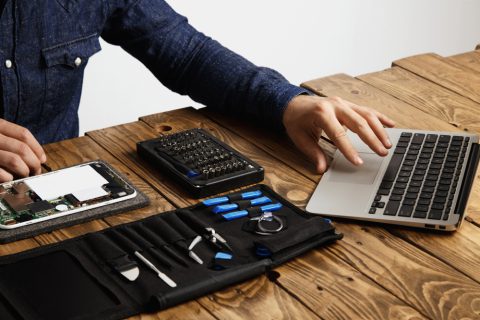
This is the method we use at Pure IT, and for good reason; it’s the only way we believe to truly refurbish a laptop to its original factory standard.
Pros of Using Original Parts
- Best for Quality & Durability – Replacing worn or damaged parts with new original manufacturer components is the only way to match the original factory finish.
- Longer Lifespan – Unlike paint or vinyl, new parts don’t degrade over time and maintain the laptop’s original scratch resistance.
Cons of Using Original Parts
- Higher Cost – Sourcing genuine manufacturer parts and installing them correctly costs more than painting or wrapping.
- Less Environmentally Friendly – While refurbishing extends a laptop’s lifespan, manufacturing new parts adds to its carbon footprint.
- Relying on the quality of the original Manufacturer – While historically you could always rely on the quality of a premium Business line Dell or HP laptop, more recently some models have been released with really poor quality paint finish on the laptop cases. By relying on the original manufacturer parts, this method is exposed to the same short falls the manufacturer has delivered. At Pure IT, we go through a lengthy process to evaluate any new model we bring into our product line which includes quality checking the original case durability.
Final Thoughts on Using Original Parts
If quality and longevity matter, this is the best way to refurbish a laptop. It’s how we have refined our refurbishment process over the last 15 years. At Pure IT Refurbished because we believe in providing organisations with a genuine, factory-quality product.
4. Selling Laptops Without Any Refurbishment
Some refurb companies skip the refurbishment process entirely and simply grade laptops as they are, selling them based on their existing condition.
Pros of Selling Laptops Without Refurbishment
- Lowest Cost – No refurbishment means the lowest possible pricing for buyers.
- Original Finish – As no refurbishment work is taking please, there is less risk to poor refurbishment processes that result in quality issues over time.
Cons of Selling Laptops Without Refurbishment
- Varied Condition – Depending on the grading standards of the refurbisher, buyers may receive laptops with scratches, worn keyboards, or faded screens.
- Lack of consistent supply – Refurbishers are reliant on supplying the condition they get laptops in at, so won’t always be able to guarantee quantity of a particular model in a particular grade.
Final Thoughts on Unrefurbished Laptops
This method works for budget-conscious buyers willing to accept minor cosmetic flaws or only looking for a small quantity of laptops. However, it doesn’t improve longevity or usability, which is why we prefer to fully refurbish every laptop we sell
Verdict: Which Refurbishment Method is Best?
It’s hard to give an outright winner as every method has its pros and cons; if you’re looking for factory-standard quality and long-term durability, using original manufacturer parts is the best choice.
- For budget-friendly refurbishing, vinyl wrapping is a solid option, but quality choosing the right refurbisher is critical.
- For uniform aesthetics, painting works if done to a high standard, but durability is a concern and again selecting a reputable refurbisher is critical.
- For lowest cost, selling laptops as-is is an option, but you may not be able to get volume of a consistent grade.
At Pure IT Refurbished, we choose to refurbish only with original parts, ensuring that every laptop meets our strict quality standards.
If you’re looking for a refurbished laptop that looks, feels, and lasts like new, browse our range here.